Rethinking Modular Construction: Why DfMA is a Better Fit for Hong Kong

MiC Construction in Hong Kong
Hong Kong’s construction industry faces significant challenges: high costs, labor shortages, an aging workforce, and slow project delivery. To address these issues, the Development Bureau has been actively promoting the adoption of Modular Integrated Construction (MiC) since 2019.
While MiC offers benefits in theory—namely off-site prefabrication to improve efficiency—its application in Hong Kong has exposed critical limitations.
The Reality of MiC in Hong Kong
Having worked on MiC projects for transitional housing and processed IPA submissions for the Buildings Department, I’ve seen firsthand the logistical and technical issues that arise.
Hong Kong’s unique urban environment makes widespread adoption of MiC highly impractical:
Logistical Constraints: Limited street widths, low headroom under footbridges and flyovers, and narrow access points complicate the transportation and installation of large volumetric modules.
Structural Challenges: Integrating MiC modules with in-situ structural frames is complex, especially when addressing fire separation, water seepage risks, and compartmentalization.
Workmanship Issues: Poor manufacturing standards in factories often lead to improper on-site assembly, resulting in last-minute alterations that compromise safety and quality.
Why DfMA is a Better Path Forward
To truly innovate within Hong Kong’s construction industry, we should shift focus from MiC to DfMA (Design for Manufacture and Assembly). DfMA differs in its approach by promoting modularity and prefabrication while maintaining flexibility to address varying project needs and site constraints.
Here’s why DfMA works:
Tailored Design: DfMA allows components to be customized to specific project requirements, rather than forcing a one-size-fits-all module.
Reduced Constraints: By focusing on individual components instead of entire volumetric units, DfMA avoids transport and installation challenges caused by Hong Kong’s tight urban environment.
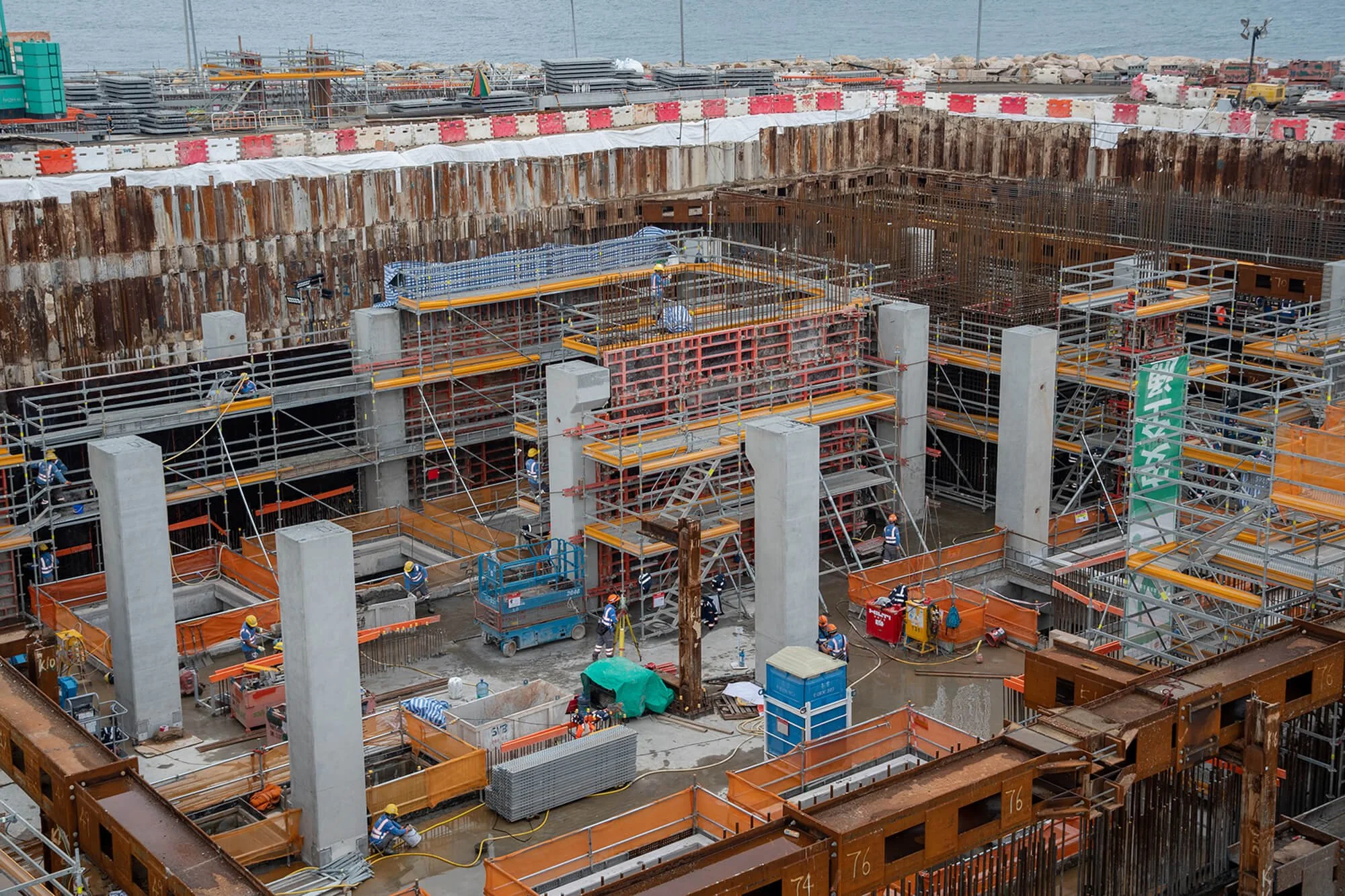
Usage of DfMA in Hong Kong (Image via dragageshk.com)
Rather than heavily relying on MiC, adopting the DfMA methodology will enable Hong Kong's construction industry to realize the benefits of modular construction—without its limitations.
We need to pave the way for smarter, more efficient construction in our city by embracing methodologies that balance innovation with pragmatism.
– Thomas
